
Natural herbal support for the 2026 pollen season.
If you feel as though your hayfever symptoms are starting earlier each year and dragging on well into the autumn, you are not imagining it. Recent BBC reporting confirms what so many lifelong sufferers already suspected: hayfever misery really does last longer now than it did a generation ago, with British pollen seasons stretching by up to two additional weeks since the 1990s. For anyone over 40 who has lived with hayfever for decades, the change is unmistakable.
At Napiers, Britain's oldest herbal apothecary with 165 years of experience in natural health, we hear it from our customers every spring. Eyes itch earlier. Sinuses feel heavier for longer. Skin around the nose turns sore and flaky by April rather than May. This guide looks at why pollen seasons are changing, how to recognise the earliest signs of hayfever, and which gentle herbal remedies can support you from the very first sneeze.
Climate Change and Hayfever
Climate change sits at the heart of the shift. Warmer winters mean that trees release pollen earlier, often as soon as February, while drier springs allow pollen to linger in the air rather than being rinsed away by rain. Birch pollen, which affects roughly one in four British hayfever sufferers, has been peaking sharply, and grass pollen season is now noticeably extended too.
For those in their forties, fifties and beyond, hayfever can also feel more intense than it did in earlier life. Hormonal changes around the perimenopause and menopause can sensitise the immune system, meaning women who barely noticed pollen in their twenties may suddenly find themselves reaching for tissues by March. It is a helpful reminder that allergies can evolve as we do.
Recognising the Early Signs of Hayfever
Because pollen is arriving earlier, it pays to recognise the first whispers of hayfever before symptoms take hold. The sooner you begin supportive measures, the better your chances of a calmer season. Early signs include:
- Itchy, watery or gritty eyes, especially first thing in the morning
- Frequent sneezing, often in clusters
- A runny or blocked nose that feels worse outdoors
- A scratchy throat or tickly cough
- Sore, red or flaky skin around the nostrils and upper lip
- Tiredness, mild headaches and a foggy, unfocused feeling
- Itching inside the ears or on the roof of the mouth
Many people mistake these symptoms for a cold at first. If you notice them repeating as soon as you step outside, or peaking on dry, breezy days, pollen is the more likely culprit.
How to Get Ahead of the Pollen Season: Herbalist Tips
Our medical herbalists recommend preparing early. Supporting the body before pollen counts climb is far more effective than chasing symptoms once they have set in. Practical steps include:
- Begin gentle herbal support two weeks before your symptoms usually appear
- Wear wraparound sunglasses to shield the eyes on high pollen days
- Rinse your hair and change clothes after time spent in parks or gardens
- Apply a small amount of balm around the nostrils to trap pollen before it enters the airways
- Keep bedroom windows closed overnight when pollen forecasts are high
- Use an air purifier in the bedroom to calm night time symptoms
- Eat a colourful, plant rich diet to support healthy immune balance
The Met Office pollen forecast is updated daily through spring and summer. Checking it becomes a small seasonal habit that pays off enormously.
Soothe Sore, Flaky Skin: Calendula and Marshmallow Soothing Salve
Constant nose blowing leaves the skin around the nostrils and upper lip raw, red and flaky. The Napiers Calendula and Marshmallow Soothing Salve is a beautifully gentle, handmade balm that protects and restores tender, irritated skin. Calendula, the golden marigold flower long favoured by British herbalists, supports natural skin renewal, while marshmallow root forms a softening, hydrating layer that locks in moisture.
There is a second clever use too. A thin smear around the rim of each nostril before you leave the house acts as a natural barrier, helping to trap pollen before it travels further up the nose and triggers a reaction. Reapply after blowing your nose, and use it freely on sore cheeks or dry eyelids as often as needed. The formula is also loved by new mothers and runners, which speaks to how kind it is on the most delicate skin.
Clear Congested Sinuses: Sinus Support Bundle
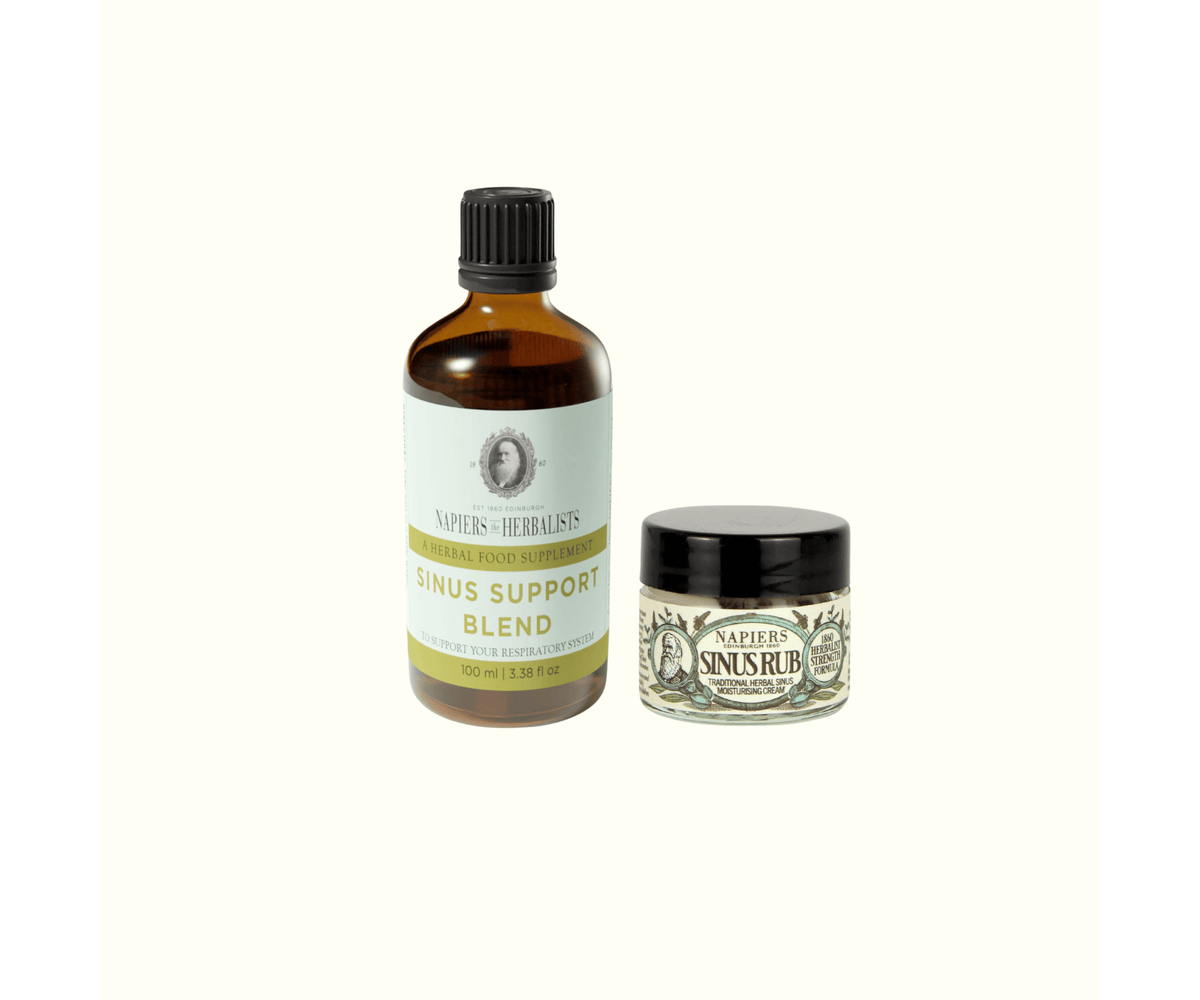
Blocked sinuses are often the most draining part of hayfever. Mornings begin with pressure behind the cheekbones, a throbbing forehead and that muffled feeling that makes concentration difficult. The Napiers Sinus Support Bundle combines a traditional herbal tincture featuring ribwort plantain, calendula, eyebright and elderflower with a warming sinus rub cream scented with eucalyptus and lavender. Together, they offer a complete morning and evening ritual to ease congestion and support clearer, calmer breathing. It is an ideal bundle to keep on the bedside table from April through to late summer.
Refresh Tired, Itchy Eyes: Eyebright Moisturising Herbal Eye Drops
Itchy, watering eyes are among the most immediate signs of pollen exposure. The traditional herbal answer has always been eyebright, or Euphrasia officinalis, a small alpine flower that British herbalists have trusted for centuries. The Napiers Eyebright Moisturising Herbal Eye Drops combine eyebright with hyaluronic acid and MSM to refresh and hydrate dry, tired eyes. Alcohol free and suitable for frequent daily use, they slip easily into a handbag for a quick refresh after a walk in the garden or a drive with the windows down.
Frequently Asked Questions
Can herbal eye drops really help itchy hayfever eyes?
Herbal eye drops containing eyebright, hyaluronic acid and MSM offer a hydrating, soothing rinse that helps calm irritation and rehydrate dry or gritty eyes. They can be used as often as needed through the day, making them a handy addition to any handbag or desk drawer during pollen season.
Can I use herbal remedies alongside antihistamines?
Many people combine herbal support with conventional antihistamines. However, because every individual is different, we always recommend speaking to your GP or to a qualified medical herbalist at Napiers for personalised advice before combining remedies, especially if you take any regular medication.
Ready to Face the Pollen Season Your Way?
Browse the full Napiers allergy relief collection to discover traditional British herbal remedies formulated by our medical herbalists, or visit our Edinburgh clinic for a personal consultation. Whatever your pollen story, we are here to help you breathe, see and feel a little more comfortably this season.
References
- BBC News. Hayfever misery does last longer: here is how to cope.
- Allergy UK. Hayfever help as the 2026 pollen season lands.
- Met Office. UK pollen forecast and information.
- NHS. Hayfever: symptoms, causes and treatment.
- The Conversation. Hayfever: why symptoms are so bad this year and what to do if your usual remedies are not working.


